
On Tuesday, February 7, 2017, Sen. Kirsten Gillibrand (D-N.Y.) and Rep. Rosa DeLauro (D-Conn.) reintroduced the Family And Medical Insurance Leave (FAMILY) Act, which would create a national system of paid leave for employees. This is the third attempt in the last five years by these same legislators to create federal paid leave. But, with
Third Circuit Says “Last Call” for Employee Terminated After Caught Drinking While on FMLA “Bed Rest”
On January 31, 2017, the United States Court of Appeals for the Third Circuit joined the Seventh, Eighth and Tenth Circuits in holding that an employer’s honest belief that its employee was misusing FMLA leave is enough to defeat an FMLA retaliation claim. The court’s opinion in Capps v. Mondelez Global, LLC also serves as a reminder to employers that an employee’s request for intermittent FMLA leave may also trigger the employer’s obligation to engage in the interactive process with the employee under the ADA.
Continue Reading Third Circuit Says “Last Call” for Employee Terminated After Caught Drinking While on FMLA “Bed Rest”
Supreme Court Nominee Has Put “Reasonable” into Reasonable Accommodation Obligations
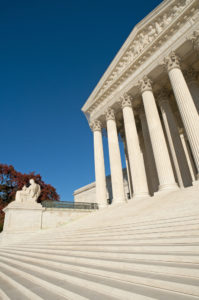 In case your news and twitter accounts are down, and you otherwise have not heard the news… President Trump has nominated Judge Gorsuch from the U.S. Court of Appeals for the Tenth Circuit to fill Justice Antonin Scalia’s vacant Supreme Court seat. There are surely countless articles about his nomination hitting the airwaves even as I type this, but for employers who struggle with leave management issues, a quick review of the Hwang v. Kansas State University decision, authored by Judge Gorsuch, may provide employers with hope that leave management law could move in the right direction.
Continue Reading Supreme Court Nominee Has Put “Reasonable” into Reasonable Accommodation Obligations
Disability and Leave Law Under President Trump: What’s Next?
Since Election Day, prognosticators and pundits have been speculating about how the Trump Administration’s actions will impact existing laws and regulations. Now that President Trump and his team have hit the ground running, what can we expect from the Department of Labor (including OFCCP), the EEOC and the President’s own executive actions in the areas
A Cautionary Tale: How Sudden Changes to Intermittent FMLA Can Cost You
A January 9 decision by the Seventh Circuit Court of Appeals serves as a vivid reminder that employers must tread with great caution when managing intermittent leave under the Family and Medical Leave Act. As the ruling in Wink v. Miller Compressing Company highlights, making abrupt changes in leave accommodations or providing misinformation about leave
Employee Cannot Maintain Collective Action for Employer’s Failure to Post FMLA Notice
We all know that the FMLA is fraught with pitfalls that can lead to costly mistakes. But a collective action for simply failing to post a notice? On January 6, 2017 a U.S. District Court in Maryland rejected such an attempt. In Antoine v. Amick Farms, LLC the plaintiffs claim that a class of employees
Is it a New Leave Year?
As the clock struck midnight on December 31, 2016, employees across the United States were celebrating. While most were celebrating the coming of the New Year (or perhaps, more likely, good riddance to 2016), some employees were celebrating because January 1, 2017, brings with it a new allotment of FMLA leave days. If your employees
Does Calling Someone an “Injury Compensation Specialist” Prove FMLA Retaliation?
Perhaps not, according to the First Circuit Court of Appeals. Not all retaliation is the same, the court reminds us in its December 14, 2016 decision in Chase v. U.S. Postal Service. Evidence that a supervisor retaliated because of an employee’s workers’ compensation claim does not itself prove the supervisor also retaliated because the employee took concurrent leave under the Family and Medical Leave Act (FMLA). Mocking an employee’s allegedly fake injury does not necessarily show hostility toward use of FMLA leave.
Continue Reading Does Calling Someone an “Injury Compensation Specialist” Prove FMLA Retaliation?

Is Santa Claus a Key Employee?
At North Pole Enterprises, the company’s entire existence is dependent upon a single delivery on the night of December 24. On December 23, Santa Claus, the only licensed delivery driver at North Pole Enterprises, injures his back while loading packages in his “truck.” Later that day, Mr. Claus contacts the Human Resources Department at North
CA Revives Former DJ’s Disability and Leave Claims Against Univision Radio
 What is a disability? And when are employers on notice to provide employees leave? These were some of the questions raised in the California Court of Appeals (Second Appellate District) November 15, 2016 decision, Soria v. Univision Radio Los Angeles, Inc.
Sofia Soria, a former DJ at Univision Radio Los Angeles Inc. (“Univision”), filed suit against Univision, primarily alleging disability discrimination, failure to accommodate disability, failure to engage in the interactive process under the California Fair Employment and Housing Act (“FEHA”) and interference with California Family Rights Act (“CFRA”) rights. Soria was diagnosed with a potentially cancerous stomach tumor in late 2010. In late 2011, she allegedly gave multiple notices of her condition to Univision and missed some work due to medical appointments. In December 2011, after Soria allegedly told her supervisor that she may need surgery, she was terminated.
The lower court granted summary judgment in favor of Univision, but the California Court of Appeals (the “Court”) disagreed, finding there were factual disputes which the Court could not resolve. Some of the key disability and leave related findings include:Continue Reading CA Revives Former DJ’s Disability and Leave Claims Against Univision Radio